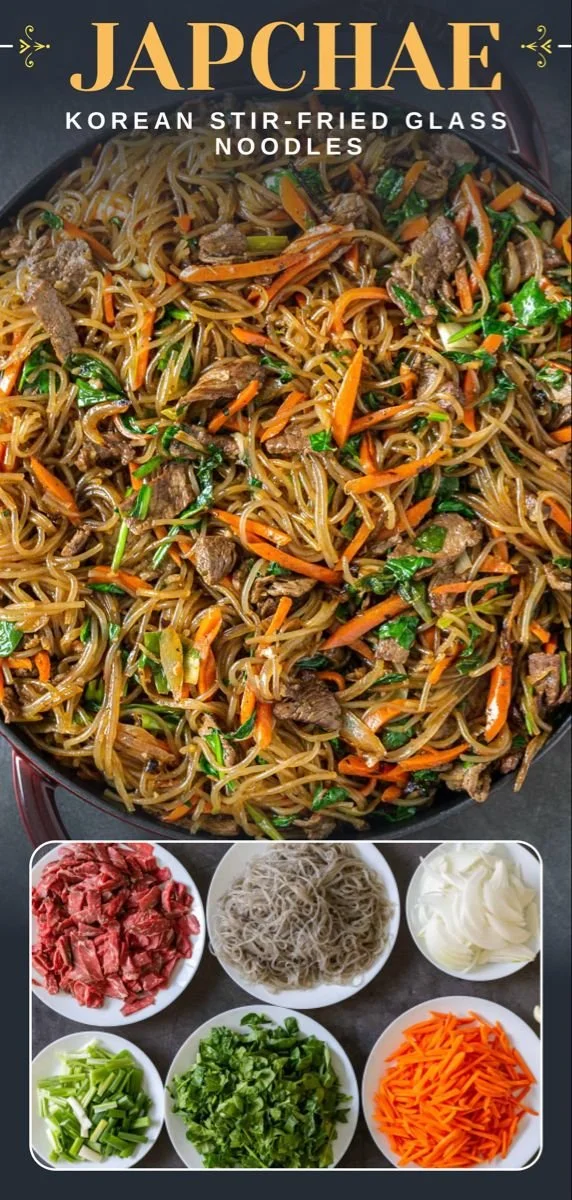
Japchae, or Korean Stir-Fried Glass Noodles, offers a delightful combination of flavors and textures that makes it a beloved dish. Its sweet and savory profile alongside the chewy glass noodles creates a comforting meal perfect for any occasion. Whether you’re enjoying it as a main dish or a side, this recipe is simple, quick, and family-friendly.
Why You’ll Love Japchae
- Easy to Prepare: With straightforward steps and minimal prep, you can have a delicious meal on the table in no time.
- Flavor Variety: The balance of sweet and savory from the soy sauce and sugar pairs beautifully with various vegetables and beef.
- Customizable: Adjust the ingredients to suit your preferences, whether you’re looking for more vegetables, different proteins, or dietary substitutions.
- Perfect for Meal Prep: This dish stores well, making it an excellent option for meal prep or leftovers throughout the week.
- Family-Friendly: The appealing colors and textures make it a hit with kids and adults alike.
Recipe Overview
- Prep Time: 15 minutes
- Cook Time: 15 minutes
- Total Time: 30 minutes
- Servings: 4
- Difficulty Level: Easy
Ingredients You’ll Need for Japchae
-
Noodles:
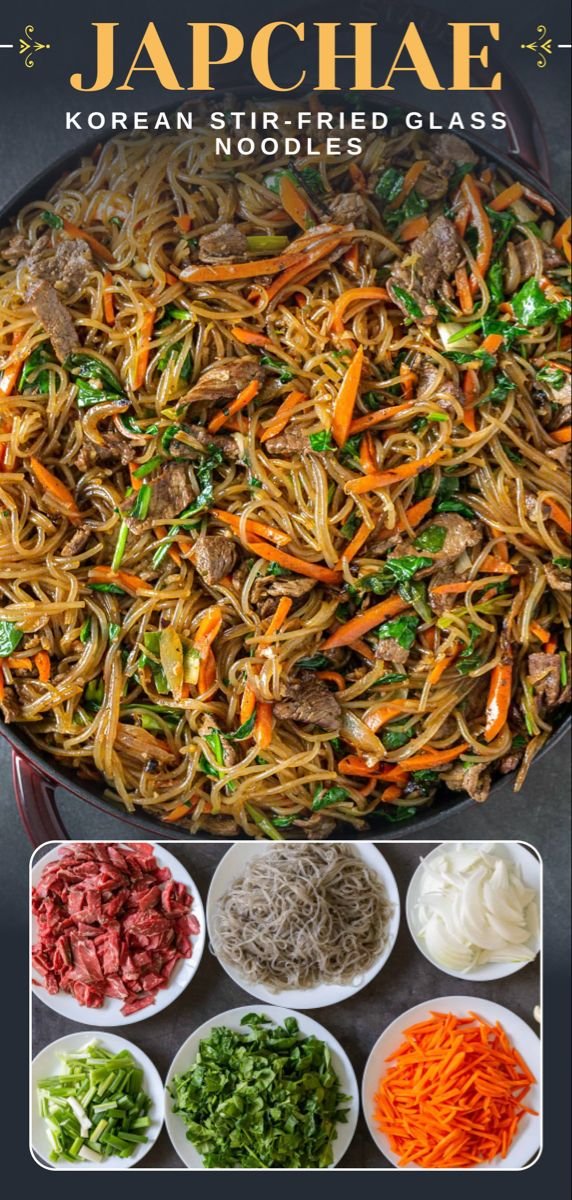
- 8 ounces sweet potato glass noodles (dangmyeon)
-
Vegetables:
- 1 cup sliced carrots
- 1 cup bell peppers, sliced (your choice of color)
- 1 cup spinach
- 1/2 onion, sliced
-
Protein:
- 1/2 pound beef, thinly sliced
-
Aromatics:
- 3 cloves garlic, minced
-
Sauce:
- 1 tablespoon sesame oil
- 2 tablespoons soy sauce
- 1 tablespoon sugar
- 1 teaspoon ground black pepper
-
Garnish:
- Sesame seeds for garnish
Note: Feel free to substitute the beef with chicken or tofu for different protein options. Additionally, you can mix in other vegetables like mushrooms or green onions based on what you have on hand.
How to Make Japchae
-
Cook the Noodles:
- Boil the sweet potato glass noodles according to package instructions. Once cooked, drain and set aside.
-
Sauté the Beef:
- In a large pan, heat the sesame oil over medium heat. Add the sliced beef and cook until browned, about 5 minutes.
-
Add Vegetables:
- Stir in the onions, garlic, carrots, and bell peppers. Sauté for about 5 minutes, or until the vegetables are tender but still crisp.
-
Combine Noodles and Spinach:
- Add the cooked noodles and spinach to the pan. Toss everything together gently to combine.
-
Mix the Sauce:
- In a small bowl, whisk together the soy sauce, sugar, and black pepper. Pour this mixture over the noodle and vegetable mixture, stirring well to coat everything evenly.
-
Heat Through:
- Continue to cook everything for an additional 2-3 minutes until everything is heated through and well combined.
-
Serve:
- Serve hot, garnished with sesame seeds.
Tips for Success
- Don’t Overcook the Noodles: Ensure you follow the cooking time on the package to avoid mushy noodles, as they will continue to cook slightly while stir-frying.
- Keep Vegetables Crisp: Aim for a quick sauté to keep your veggies tender-crisp for better texture.
- Adjust Seasonings: Taste the dish before serving and adjust the soy sauce or sugar according to your flavor preference.
- Let the Beef Rest: After cooking, let the beef sit for a minute to retain its juices, adding tenderness to your dish.
Easy Variations
- Vegetable-Heavy: Add more vegetables like broccoli, snap peas, or zucchini for an extra boost of nutrition and color.
- Spicy Kick: Add a teaspoon of gochujang (Korean red pepper paste) to the sauce for a spicy twist.
- Vegan Option: Omit the beef and use tofu or tempeh as a protein alternative, and ensure your soy sauce is vegan.
- Noodle Swap: Try replacing sweet potato noodles with rice noodles or udon noodles for a different texture.
What to Serve with Japchae
- Rice: Serve alongside steamed jasmine rice to complement the flavors and make the meal more filling.
- Kimchi: This Korean staple adds a spicy and tangy flavor, balancing the sweetness of the japchae.
- Korean Fried Chicken: The crispy texture of fried chicken is a delightful contrast to the chewy noodles.
- Vegetable Kimbap: These sushi-like rolls bring freshness and a variety of textures to your meal.
Storage and Reheating
- Refrigerator Storage: Store any leftovers in an airtight container in the refrigerator for up to 3 days.
- Freezer Storage: For longer storage, you can freeze the japchae in freezer-safe containers for up to 2 months.
- Reheating: Reheat in a microwave or in a pan over low heat. If reheating in a pan, add a splash of water or broth to prevent drying out and preserve the texture.
- Meal Prep Note: This dish is great for meal prep as the flavors develop over time, making it even tastier the next day.
Common Mistakes to Avoid
- Cooking Noodles Too Long: This can lead to a mushy texture. Follow the package’s cooking time closely.
- Overcrowding the Pan: This can steam the ingredients instead of sautéing them properly. Cook in batches if you have a large quantity.
- Skipping the Oil: Sesame oil adds depth to the dish. Don’t skip it; instead, opt for a neutral oil and finish with sesame oil for flavor.
- Not Tasting Before Serving: Always sample your dish to adjust seasonings according to your taste preferences.
Japchae: Background & Cultural Inspiration
Japchae can be traced back to the Joseon Dynasty, where it was served at royal banquets. It symbolizes harmony due to the combination of meat, vegetables, and glass noodles. Traditionally, it is prepared for special occasions and celebrations, embodying the richness of Korean cuisine. The dish not only highlights the use of fresh ingredients but also showcases the importance of balance in flavors, a core principle in Korean cooking.
Frequently Asked Questions
Can I use different noodles?
Yes! You can swap sweet potato glass noodles for rice noodles or udon noodles, although the texture will vary slightly.
How spicy is Japchae?
Japchae is typically mild, but you can adjust the spice level by adding gochujang or red pepper flakes based on your preference.
Can I make Japchae ahead of time?
Yes, you can prepare japchae a day in advance. It reheats well, and many say the flavors develop further overnight.
How should I store leftovers?
Keep leftover japchae in an airtight container in the refrigerator for up to 3 days. You can also freeze it for up to 2 months.
What vegetables can I add to Japchae?
Feel free to include any vegetables you like! Broccoli, zucchini, mushrooms, or bell peppers are all great additions.
Final Thoughts
Japchae is an exquisite and satisfying dish that captures the essence of Korean flavors while offering convenience and flexibility in preparation. Its delightful flavor combinations and ease of cooking make it a must-try for any home cook. Dive into this recipe, and you’ll see why it’s a favorite worldwide. Enjoy the process and savor every bite!
PrintJapchae (Korean Stir-Fried Glass Noodles)

Japchae is a delicious Korean dish made with stir-fried glass noodles, a mix of vegetables, and tender beef, offering a sweet and savory flavor profile.
- Prep Time: 15 minutes
- Cook Time: 15 minutes
- Total Time: 30 minutes
- Yield: 4 servings
- Category: Main Course
- Method: Stir-Frying
- Cuisine: Korean
- Diet: Gluten-Free
Ingredients
- 8 ounces sweet potato glass noodles (dangmyeon)
- 1 cup sliced carrots
- 1 cup bell peppers, sliced (your choice of color)
- 1 cup spinach
- 1/2 onion, sliced
- 1/2 pound beef, thinly sliced
- 3 cloves garlic, minced
- 1 tablespoon sesame oil
- 2 tablespoons soy sauce
- 1 tablespoon sugar
- 1 teaspoon ground black pepper
- Sesame seeds for garnish
Instructions
- Cook the noodles: Boil the sweet potato glass noodles according to package instructions. Once cooked, drain and set aside.
- Sauté the beef: In a large pan, heat the sesame oil over medium heat. Add the sliced beef and cook until browned, about 5 minutes.
- Add vegetables: Stir in the onions, garlic, carrots, and bell peppers. Sauté for about 5 minutes, or until the vegetables are tender but still crisp.
- Combine noodles and spinach: Add the cooked noodles and spinach to the pan. Toss everything together gently to combine.
- Mix the sauce: In a small bowl, whisk together the soy sauce, sugar, and black pepper. Pour this mixture over the noodle and vegetable mixture, stirring well to coat everything evenly.
- Heat through: Continue to cook everything for an additional 2-3 minutes until everything is heated through and well combined.
- Serve: Serve hot, garnished with sesame seeds.
Notes
Feel free to substitute the beef with chicken or tofu for different protein options. You can also mix in other vegetables like mushrooms or green onions based on what you have on hand.